

Is Knitted Fabric for Summer or Winter?


Both. Knitted fabric is not a seasonal material — it is a construction method. The same looping structure that makes a chunky wool sweater warm makes a fine cotton knit cool, because the loops trap air in one case and let it move in the other. What decides the season is gauge, fibre and weight, not the fact that something is knitted.
This question comes up constantly, and the reason is straightforward: nearly all the knitwear sold in shops is winter knitwear, so people reasonably conclude that knits are a winter thing. That is a fact about retail buying, not about fabric.
Your T-shirt is knitted. So is your jersey dress, your socks and most activewear. Nobody calls those winter clothes.
Knit versus woven, properly
Every fabric is made one of two ways.
Woven fabric has threads crossing at right angles, over and under. It is stable, holds a crease, does not stretch much. Shirting, denim and most trousers are woven.
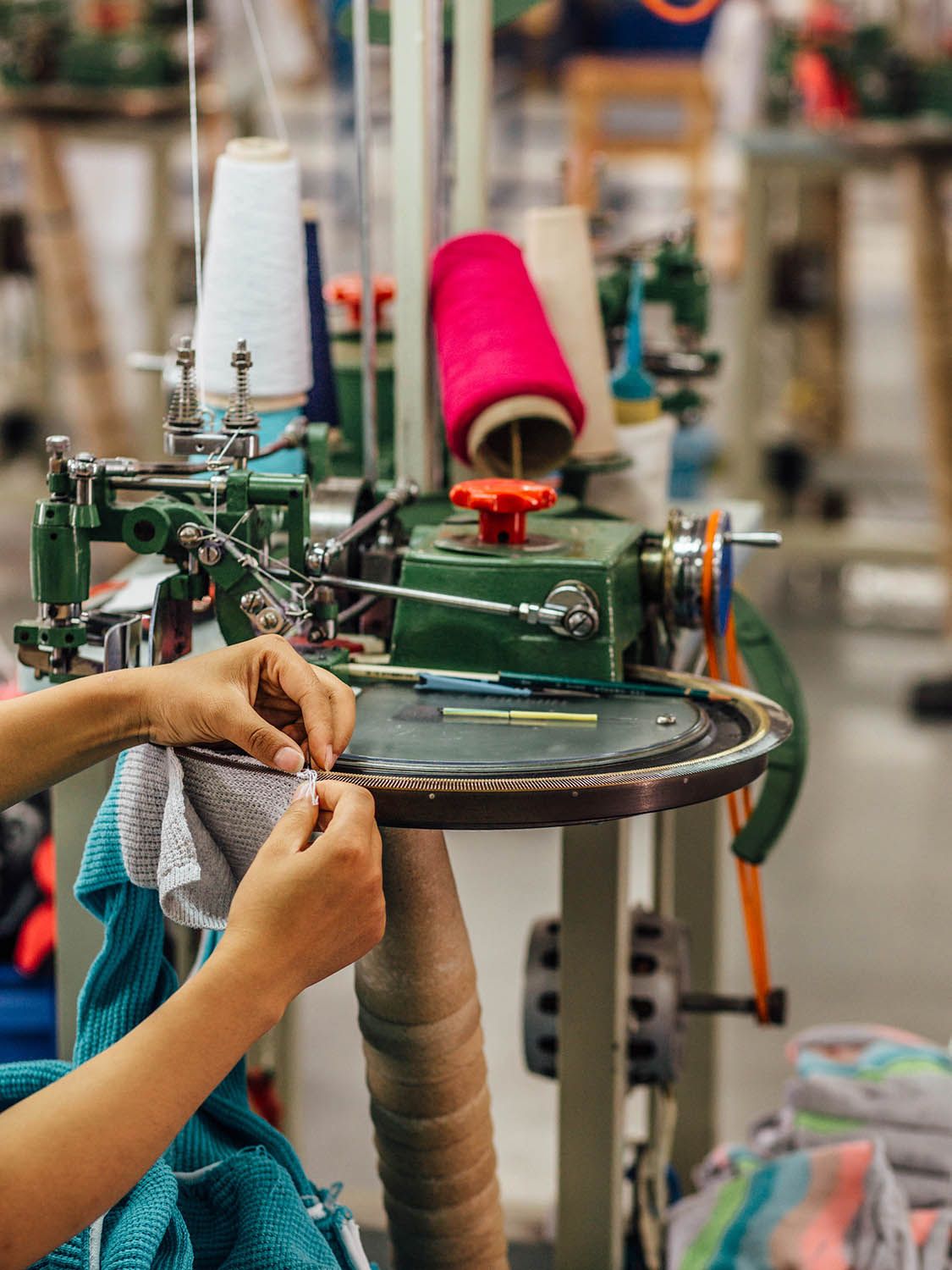
Knitted fabric is a single continuous yarn formed into interlocking loops. Those loops can move against each other, which is why knits stretch, drape and recover.
Neither belongs to a season. Both appear in summer and winter clothing across the world.
What actually decides the season
| Variable | Summer | Winter |
|---|---|---|
| Gauge | Fine, 12–18 stitches per inch. Light passes through. | Chunky, 3–7 stitches. Dense and insulating. |
| Fibre | Cotton, linen, cotton-rich blends | Wool, cashmere, heavier blends |
| Weight | Light. Drapes close to the body. | Heavy. Holds its own shape. |
| Structure | Open, single jersey, pointelle | Dense, cable, double-faced, waffle |
| Silhouette | Relaxed, skimming, half sleeves | Closer, longer, full sleeves |
Change all five and you get two garments that are both knitted and have almost nothing else in common. That is the whole answer.


The two-second test
Hold the fabric up to a window or a light.
If light passes visibly through the stitch structure, air will too — it is a summer-weight knit. If the fabric blocks the light, it traps air, and it is built for cold.
It costs nothing, works in any shop, and tells you more than the label usually does.
Why the question matters more in India
In a country with four months of genuine winter, the distinction is academic. In most of India, winter is a handful of weeks and the rest of the year sits between 20 and 40 degrees.
If knitwear were genuinely a winter fabric, it would be an impractical thing to own here. Understood properly — as a construction that can be light or heavy — it becomes one of the more useful things in a wardrobe, because a knit adjusts across a range of temperatures in a way woven fabric does not.
We knit in fine gauge, in 100% cotton or GRS certified 60% recycled cotton, 40% recycled acrylic — a specification chosen for Indian conditions rather than European ones. That is what lets the same pieces be worn in March and in December rather than sitting in storage for most of the year. See the knitwear collection.
Knits you already wear in summer
- T-shirts. Single jersey, a knitted structure.
- Polo shirts. Pique, also knitted.
- Socks and underwear. Almost universally knitted.
- Activewear. Knitted for stretch and breathability.
- Jersey dresses. Knitted, which is why they drape.
If knitted fabric were inherently warm, none of these would work in heat. The reason they do is that they are fine gauge in breathable fibres — which is precisely what a summer-weight knit top is.
Frequently asked questions
Is knitted fabric for summer or winter?
Both. Knitting is a construction method rather than a seasonal material. Fine-gauge knits in cotton or linen are summer fabrics, while chunky knits in wool are winter ones. What determines the season is gauge, fibre and weight, not whether the fabric is knitted.
Is knitted cotton fabric good for summer?
Yes, particularly in a fine gauge. Cotton absorbs moisture and the looped structure allows air to pass through, so a fine-gauge cotton knit is comfortable in heat. Your T-shirts are knitted cotton, which is the clearest demonstration.
How can you tell if a knit is for summer or winter?
Hold it up to the light. If light passes visibly through the stitch structure, air will too, which makes it a summer-weight knit. If the fabric blocks the light, it traps air and is built for cold weather. Fibre content on the label confirms it.
What is the difference between knitted and woven fabric?
Woven fabric is made from threads crossing at right angles, which makes it stable and relatively rigid. Knitted fabric is a continuous yarn formed into interlocking loops, which lets it stretch, drape and recover. Both are used in summer and winter clothing.
Are knitted shirts good for summer?
A fine-gauge knitted shirt in cotton or a cotton-rich blend is very comfortable in heat, and unlike a woven shirt it does not crease when you sit down. Chunky or heavily textured knits are not suited to hot weather.
Is knitwear only for winter?
No. The association exists because most knitwear sold in shops is winter knitwear, built for cold European markets. Knitted fabric itself ranges from very light to very heavy, and fine-gauge knits in natural fibres are worn year-round in hot climates.
The short version
Knitting is how a fabric is made, not when it is worn. Fine gauge and cotton is summer; chunky gauge and wool is winter. Hold it up to the light and you will know which you are holding.
More on wearing knits in heat, how knitwear is made, or dressing for the in-between months.
Read more
How Long Should Knitwear Actually Last?
Nobody puts a lifespan on the label. Realistic expectations by construction type, the three things that actually kill knitwear, and how to tell normal ageing from failure.
Read more
Waffle, Rib, Cable, Jersey: Knit Structures Explained
Most people choose knitwear by fibre and gauge and never consider structure — the third variable, and often the one explaining why two similar knits behave completely differently.
Read more

