

Waffle, Rib, Cable, Jersey: Knit Structures Explained


Jersey is the flat, smooth knit your T-shirt is made of. Rib is the vertical ridged knit used at cuffs and hems because it stretches and recovers. Waffle is a raised grid that traps air. Cable is the twisted rope pattern on a classic winter sweater. Structure changes warmth, stretch and drape as much as fibre does.
Most people choose knitwear by fibre and gauge and never consider structure, which is the third variable and often the one that explains why two similar-looking knits behave completely differently.
The four you will actually encounter
Jersey
The simplest knit structure. Flat and smooth on the front, looped on the back — which is why a T-shirt looks different inside out.
It is light, drapes well and stretches more crosswise than lengthwise. The edges curl when cut, which is why jersey garments almost always have a hem or a rib finish rather than a raw edge.
Best for: warm weather, fine-gauge tops, anything you want to skim the body.
Rib
Alternating columns of raised and recessed stitches, producing visible vertical lines. Both sides look the same.
The structure is what gives it exceptional crosswise stretch and, crucially, recovery. That is why cuffs, hems and necklines are ribbed on nearly every knitted garment ever made — they take the most stress and need to return to shape.
Best for: trims and finishes, close-fitting tops, anywhere a garment needs to grip and release.
Waffle
A raised grid of small squares, also called thermal or honeycomb. The three-dimensional structure creates pockets that trap air against the skin.
That trapped air is insulation, which is why waffle appears in thermal underwear. It also means waffle is noticeably warmer than a flat knit of the same fibre and weight — the structure is doing the work, not the yarn.
Best for: cool weather, texture, layering pieces.
Cable
Stitches crossed over each other to form raised twisting ropes. The classic Aran sweater pattern.
Cabling pulls fabric inward, so a cable knit is denser, heavier and narrower than the same yarn knitted flat. It uses considerably more yarn per garment for that reason.
Best for: genuine cold. Rarely practical in most of India.


Side by side
| Structure | Warmth | Stretch | Best season |
|---|---|---|---|
| Jersey | Low — flat, air passes through | Moderate crosswise | Warm weather |
| Rib | Moderate — depends on depth | High, with strong recovery | Year-round, mostly as trim |
| Waffle | High — traps air in the grid | Moderate | Cool weather |
| Cable | Very high — dense and thick | Low | Cold weather only |
| Pointelle | Very low — deliberate openwork | Moderate | Warm weather |
| Jacquard | Moderate — denser from carried yarn | Lower than jersey | Year-round in fine gauge |
Can you wear waffle knit in summer?
Generally not, and the reason is structural rather than about fibre.
Waffle's raised grid exists specifically to trap air against the skin. In cold weather that trapped layer is warmth. In heat it becomes a barrier that holds warm, humid air exactly where you least want it — which is why waffle in 32°C feels clammy even in cotton.
A very fine, loose waffle in pure cotton can work at the cooler end of summer, and it is fine in air conditioning. But if you want a knit for genuine heat, flat jersey or an open pointelle will always be more comfortable.
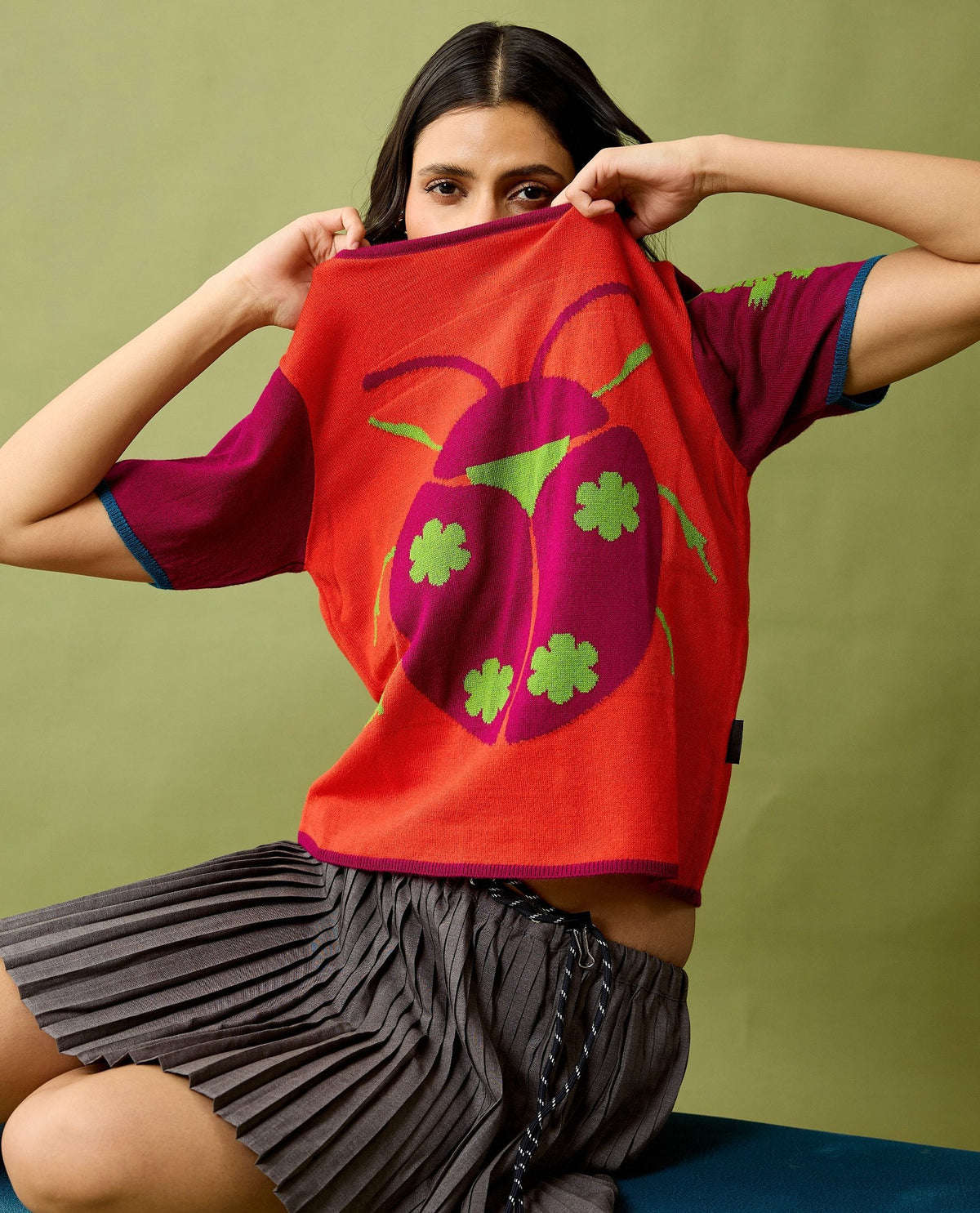
Our pieces are knitted in fine-gauge jacquard, which carries colour through the fabric structure rather than printing it on the surface. In 100% cotton or GRS certified 60% recycled cotton, 40% recycled acrylic. Jacquard is slightly denser than plain jersey because of the carried yarn, which is why gauge matters so much in keeping it wearable in heat. See the knitwear collection.
Reading structure in a shop
- Look at both sides. Jersey differs front to back. Rib looks identical. That alone identifies the two most common structures.
- Run a hand across it. Raised grid means waffle. Twisted ropes mean cable. Smooth means jersey.
- Stretch it sideways and release. Strong stretch with instant recovery is rib. Moderate stretch is jersey.
- Hold it to the light. Deliberate holes are pointelle, designed for airflow. This is different from a loose, sloppy knit.
- Check the reverse of a pattern. Colour appearing in negative means jacquard. Nothing on the reverse means it is printed.
Frequently asked questions
Can you wear waffle knit in summer?
Usually not comfortably. Waffle's raised grid is designed to trap air against the skin, which provides insulation in cold weather but holds warm humid air in heat. A very fine, loose waffle in cotton can work at the cooler end of summer or in air conditioning, but flat jersey is far better for genuine heat.
What is waffle knit?
Waffle knit, also called thermal or honeycomb, is a structure with a raised grid of small squares. The three-dimensional surface creates pockets that trap air, which is why it is warmer than a flat knit of the same fibre and weight and why it is commonly used for thermal underwear.
What is the difference between jersey and rib knit?
Jersey is flat and smooth on the front with a looped reverse, so the two sides look different. Rib has alternating raised and recessed columns and looks the same on both sides. Rib stretches much more crosswise and recovers better, which is why it is used at cuffs, hems and necklines.
Why are cuffs and hems always ribbed?
Because rib structure provides high crosswise stretch combined with strong recovery. Cuffs and hems take more stress than any other part of a garment, so they need to stretch when pulled on and return to shape afterwards. A flat knit in those positions would go permanently loose.
Is cable knit warmer than plain knit?
Considerably. Crossing stitches pulls the fabric inward, making it denser and thicker, and the structure uses more yarn per garment. That density traps significantly more air than flat knitting, which is why cable knits are associated with genuinely cold weather.
What knit structure is best for hot weather?
Fine-gauge jersey or pointelle. Jersey is flat so air passes through easily, and pointelle contains deliberate openwork that increases airflow further. Avoid waffle and cable, both of which are designed to trap air.
The short version
Jersey for heat, rib for trims, waffle for cold, cable for real cold. Structure changes warmth as much as fibre does, and it is the variable almost nobody checks.
More on whether knits are summer or winter, jacquard colourwork, or how knitwear is made.
Read more
Is Knitted Fabric for Summer or Winter?
Your T-shirt is knitted. So are your socks and most activewear. Why the winter association exists, what actually decides a knit's season, and how to tell in two seconds.
Read more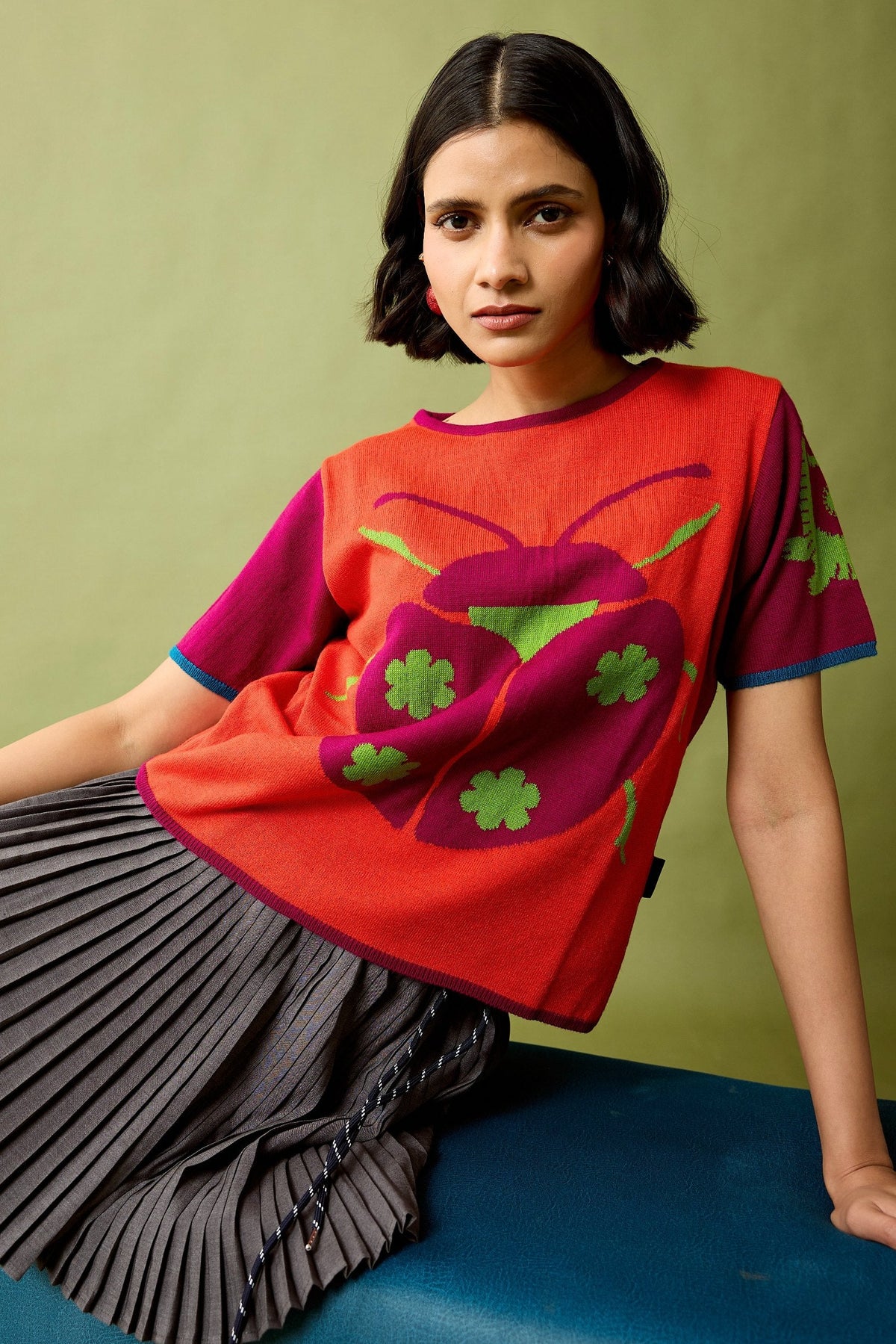
How to Wear a Half Sleeve Knit Top
The most useful thing in an Indian wardrobe and the most under-styled. One change — the half-tuck — turns it from a T-shirt substitute into something considered.
Read more

