What to Wear in 15-20°C Weather: The In-Between Guide


At 15–20°C, wear one mid-gauge knit and add a scarf. That is the whole answer. A jacket is too much, a T-shirt is too little, and layering two heavy things means carrying one of them by noon. A single knit plus something at the neck covers the range without anything to take off.
This is the hardest temperature band to dress for, and the reason is that it is not stable. Fifteen degrees at 8am becomes twenty-two by lunch and drops back after sunset. Anything you choose for the morning is wrong by afternoon.
Delhi sits here through most of November, February and March. Bangalore lives in this band for much of the year. Pune, Jaipur and Chandigarh all pass through it twice annually. It is arguably the most common weather in urban India, and almost nothing is designed for it.
Why a jacket is the wrong instrument
A jacket is binary. It is on or off, and once it is off you are carrying it. It also traps air deliberately, which is exactly wrong when the temperature is climbing.
A knit works differently. Knitted fabric has an open loop structure, so it insulates while still letting air move. It takes the edge off 16°C without becoming unbearable at 22°C. That range — comfortable across six or seven degrees rather than at one specific point — is what this weather needs.
The core outfit
One mid-gauge knit
Mid gauge means roughly 7 to 12 stitches per inch: enough structure to insulate, still light enough to wear indoors without overheating. Fine gauge is too little at 15°C; chunky gauge is too much at 20°C.
Full sleeves are usually right at this temperature. A half-sleeve knit works at the top of the range or with a scarf added.
A knit scarf
This is what makes the outfit adjustable, and it is the part most people skip.
A great deal of heat is lost through the neck, so covering it changes how warm you feel far more than its weight suggests. And unlike a jacket, a scarf can be draped loosely, wrapped tightly, pushed back off the neck or folded into a bag — four settings rather than two, none of which require taking anything off.


Full-length trousers, and closed shoes if it is early
Ankles and feet are where this temperature is actually felt. A knit on top with bare ankles is a common mistake, and it makes 16°C feel like 12°C.
Adjusting through the day
| Moment | Feels like | Do this |
|---|---|---|
| Early morning, 15–16°C | Genuinely cool | Knit plus scarf wrapped close at the neck |
| Mid-morning, 18°C | Comfortable | Loosen the scarf into a drape |
| Afternoon, 21–22°C | Warm in direct sun | Scarf into the bag; knit alone is fine |
| Air-conditioned interior | Colder than outside | Scarf back on, across the shoulders |
| After sunset, back to 16°C | Cool again | Scarf wrapped, sleeves down |
Five different conditions in one day, handled by two garments and no carrying.
What not to do
- Don't wear a T-shirt and carry a jacket. You will be cold, then carrying something, then cold again.
- Don't layer two heavy knits. Bulky, and you are back to the removal problem.
- Don't reach for chunky gauge. It is designed for below 15°C and becomes uncomfortable the moment the sun is out.
- Don't ignore the neck. The single most effective adjustment available, and the one most often skipped.
- Don't dress for the forecast high. Dress for the range, then adjust downward.
This band is exactly what our knitwear is built for. Everything is 100% cotton or GRS certified 60% recycled cotton, 40% recycled acrylic, at a gauge that works across the range rather than at one temperature — which is why the same pieces carry from March through December instead of sitting in storage. See the knitwear collection and the scarves.
The city-by-city version
- Delhi: most of November, February and March, plus early mornings well into December. A knit and scarf is the default outfit for a third of the year.
- Bangalore: this is simply the weather. A mid-gauge knit is a year-round garment, not a seasonal one.
- Mumbai and Chennai: rare, mostly January mornings. A fine-gauge knit is usually enough.
- Pune, Jaipur, Chandigarh: extended spells twice a year, spring and autumn.
- Hill stations, any season: this is the daytime temperature. Pack for it as the norm rather than the exception.
Frequently asked questions
What should I wear in 15 to 20 degree weather?
One mid-gauge knit with full sleeves, a knit scarf, and full-length trousers. The scarf is what makes the outfit adjustable as the temperature rises through the day, and it can be loosened, removed or put back on without taking off anything else.
Is 18 degrees cold enough for a jacket?
Generally not. At 18 degrees Celsius a jacket is too warm once you are moving or in the sun, and you end up carrying it. A knit with a scarf covers the same range and adjusts without being removed.
What do you wear when it is too cold for a t-shirt but too warm for a coat?
A single mid-gauge knit is the answer. Knitted fabric insulates while still allowing air to move, so it stays comfortable across a range of about six or seven degrees rather than at one specific temperature. Add a scarf for the cooler end of that range.
What is mid-gauge knitwear?
Mid gauge refers to roughly 7 to 12 stitches per inch. It sits between fine gauge, which is light and summer-weight, and chunky gauge, which is thick and built for cold. Mid gauge provides warmth without bulk, which suits mild and transitional weather.
Do you need a scarf at 15 degrees?
It helps considerably. A significant amount of body heat is lost through the neck, so covering it changes perceived warmth far more than the weight of the garment suggests. A knit scarf also adjusts easily as the day warms, unlike a jacket.
What should I wear in Delhi in November?
Most November days in Delhi sit between 15 and 22 degrees Celsius, so a mid-gauge knit with a scarf works for the majority of the month. Mornings and evenings are at the cooler end of that range, while afternoons can be comfortably warm, which is why an adjustable layer is more practical than a jacket.
The short version
One knit, one scarf, long trousers. Adjust at the neck rather than by adding and removing layers. It handles a fifteen-degree morning and a twenty-two-degree afternoon without you carrying anything.
More on ways to wear a scarf, knitwear in warm weather, or the yarn we use.
Read more
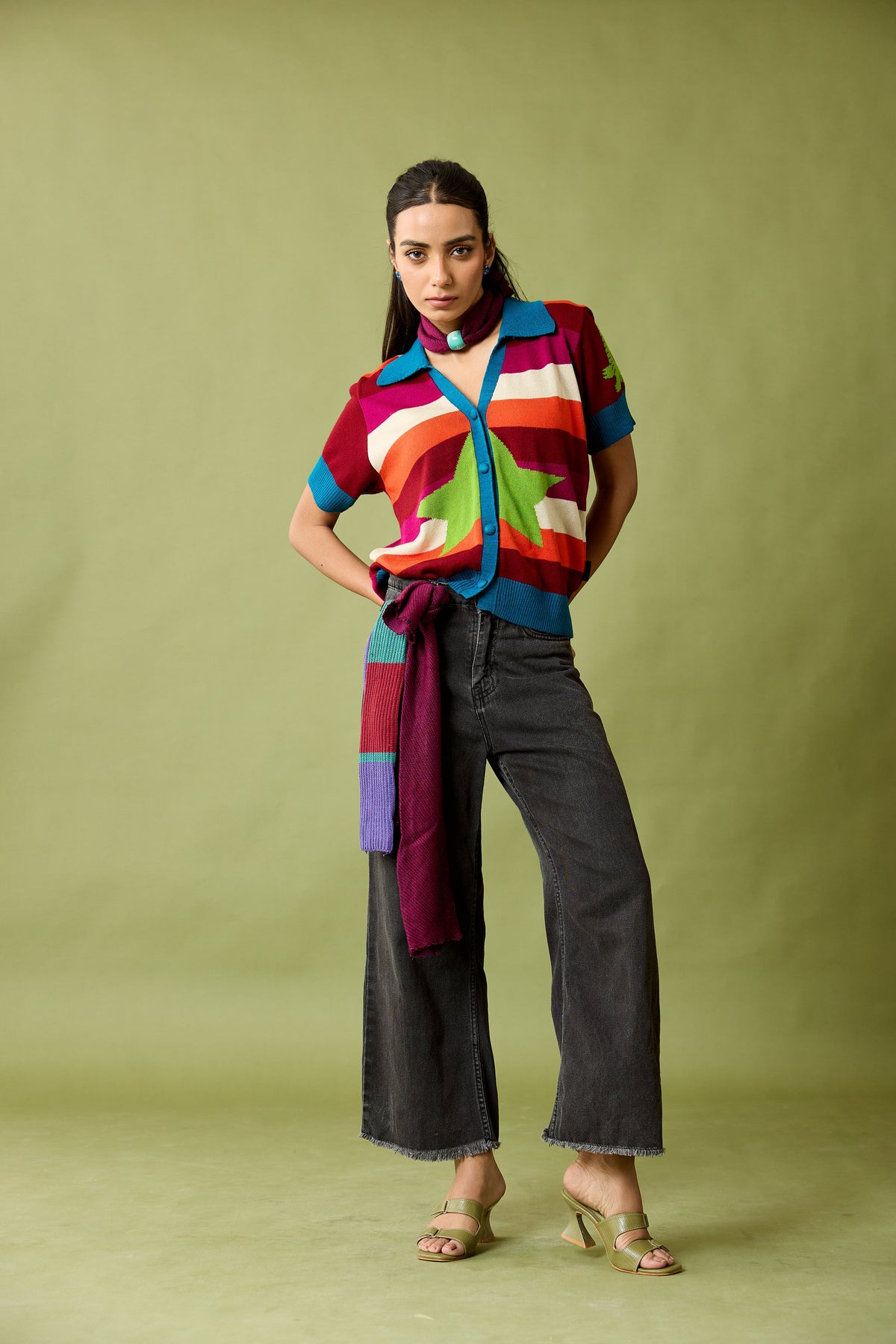
Sweater vs Cardigan vs Jumper vs Pullover: Explained
Two garments, five words. A cardigan opens at the front, a pullover doesn't, and jumper and sweater are just British and American names for the same thing.
Read more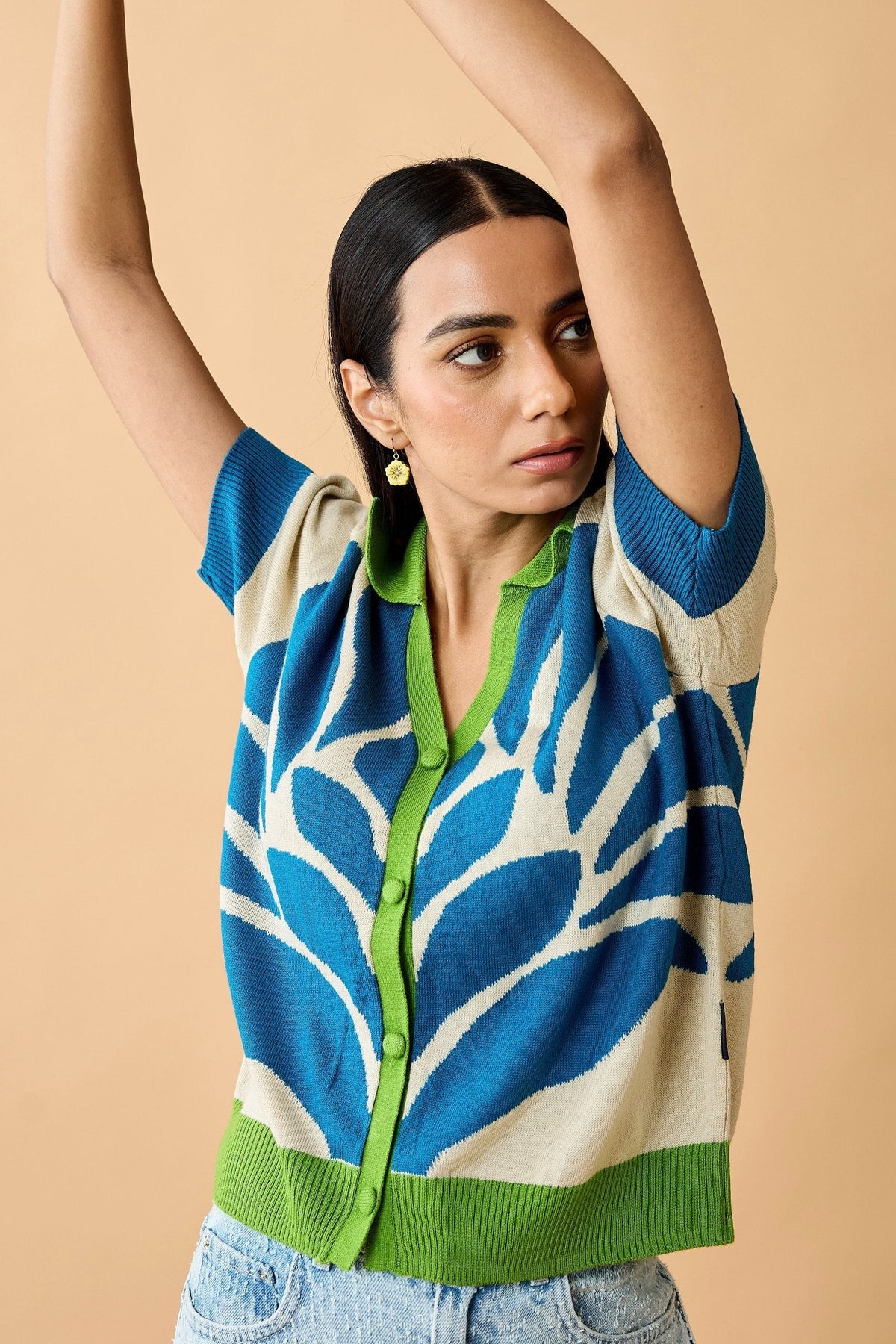
How to Layer Knitwear Without Looking Bulky
Two thin layers read as considered; two thick ones read as padding. The three rules — fine gauge, offset hems, one loose layer — and the five spots where bulk actually starts.
Read more

