Sweater vs Cardigan vs Jumper vs Pullover: Explained


A cardigan opens down the front. A pullover does not — you pull it over your head. “Jumper” and “sweater” both mean the same thing as a pullover; jumper is British, sweater is American. So there are really only two garments here, and two names for one of them.
The confusion is almost entirely linguistic rather than technical, which is why nobody explains it clearly. Here is the whole thing.
The only distinction that matters
Does it open down the front?
- Yes — buttons, zip or open edges: it is a cardigan.
- No — you put it on over your head: it is a pullover, which British English calls a jumper and American English calls a sweater.
Everything else — neckline, sleeve length, gauge, fibre — is a variation within those two categories, not a separate garment.
The words, and where they come from
| Term | Means | Where it is used |
|---|---|---|
| Sweater | Any knitted upper-body garment; in the US usually a pullover. | United States, and increasingly worldwide online. |
| Jumper | A pullover. Same garment, different word. | UK, Ireland, Australia, India. |
| Pullover | Any knit with no front opening. | Understood everywhere; the most precise term. |
| Cardigan | A knit that opens down the front. | Universal. |
| Knitwear | The category. All of the above, plus scarves, vests and knit trousers. | Universal. |
One trap worth knowing: in American English a jumper is a pinafore dress, an entirely different garment. If you are shopping on a US site, search “sweater” or “pullover” instead.
The word cardigan comes from the 7th Earl of Cardigan, a British officer in the Crimean War, whose troops wore knitted waistcoats. The name stuck to the open-front style.


Which one should you own?
A cardigan is more versatile
Because it opens, you can adjust it without taking it off — open in a warm room, closed in a cold one. That makes it the better choice for Indian conditions, where you move between 32°C outside and an aggressively air-conditioned interior several times a day.
It also layers over more things, and it comes off without disturbing your hair or collar.
A pullover is cleaner
An unbroken front reads as more streamlined. No button placket, no gaping at the bust, no fastening to align. For a piece meant to be the outfit rather than a layer over one, a pullover usually looks better.
It is also warmer at any given weight, because there is no opening for air to move through.
The other terms you will see
- Knit vest / sleeveless pullover: a pullover without sleeves. Useful in exactly the temperature band where sleeves are too much.
- Knit shirt: a knitted garment with shirt details — collar, button placket. Technically a cardigan by construction, but it reads as a shirt.
- Knit polo: pullover with a collar and short button placket.
- Crewneck, V-neck, turtleneck, mock neck: neckline variations, applicable to pullovers or cardigans.
- Cardigan coat / long cardigan: a cardigan cut long enough to work as outerwear.
Our collection includes both. What stays constant is the yarn and the gauge: every piece is 100% cotton or 100% lyocell, knitted fine enough to be worn year-round rather than only in winter. See the full knitwear collection.
Why so many knits are sold as “winter wear”
All of these words carry a winter association in most people's minds, and that is a merchandising habit rather than anything to do with the garments.
Knitwear became associated with cold because the European market that shaped modern knitwear conventions is a cold market, and thick wool sells there. But a knit is a construction, not a weight. A fine-gauge cotton pullover is functionally a T-shirt that holds its shape. A lyocell cardigan is a layer you carry for cold rooms rather than cold weather.
Which is why, in India, the useful question is not sweater versus jumper. It is gauge and fibre.
Frequently asked questions
What is the difference between a sweater and a jumper?
There is no difference in the garment. Sweater is the American term and jumper is the British, Irish, Australian and Indian term for the same knitted pullover. Note that in American English a jumper means a pinafore dress instead.
What is the difference between a cardigan and a pullover?
A cardigan opens down the front, usually with buttons or a zip, so it can be worn open or closed and removed without pulling it over the head. A pullover has no front opening and must be pulled on over the head. That single structural difference is the whole distinction.
Is a jumper the same as a sweater?
Yes. Both refer to a knitted garment worn on the upper body with no front opening. Jumper is used in British English and sweater in American English, and both describe what is more precisely called a pullover.
What is a pullover?
A pullover is any knitted upper-body garment without a front opening, so it is put on by pulling it over the head. It covers what British English calls a jumper and American English calls a sweater, and it is the most precise and least ambiguous of the three terms.
What is knitwear?
Knitwear is the category of garments made from knitted fabric, in which yarn is formed into interlocking loops rather than woven at right angles. It includes cardigans, pullovers, knit vests, scarves and knitted trousers. The loop structure is what gives knitwear its stretch and drape.
Is a cardigan warmer than a pullover?
At the same weight and fibre, a pullover is warmer, because a cardigan's front opening lets air move through even when fastened. A cardigan is more versatile, though, since it can be opened or closed as the temperature changes without being removed.
The short version
Opens at the front: cardigan. Goes over the head: pullover, which is the same garment as a jumper and a sweater. Two garments, five words.
What actually determines whether a knit suits you is fibre and gauge, not the name. More on wearing knits in warm weather and judging quality.
Read more
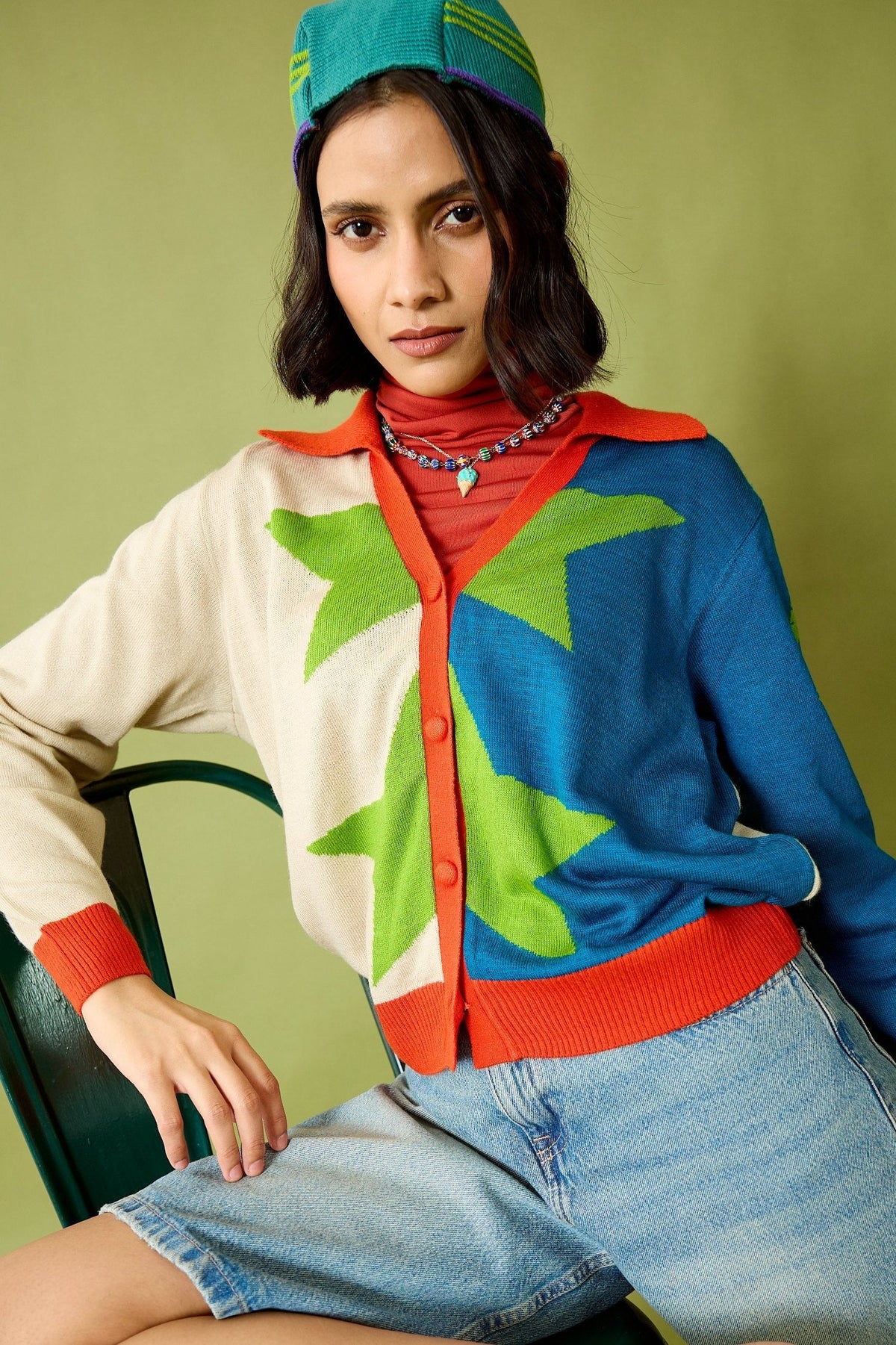
How to Tell If a Sweater Is Good Quality: 7 Checks
Price tells you little. Seven physical checks — fibre, seams, ribbing recovery, stitch evenness, weight, neckline and armhole — tell you what a knit will look like after twenty washes.
Read more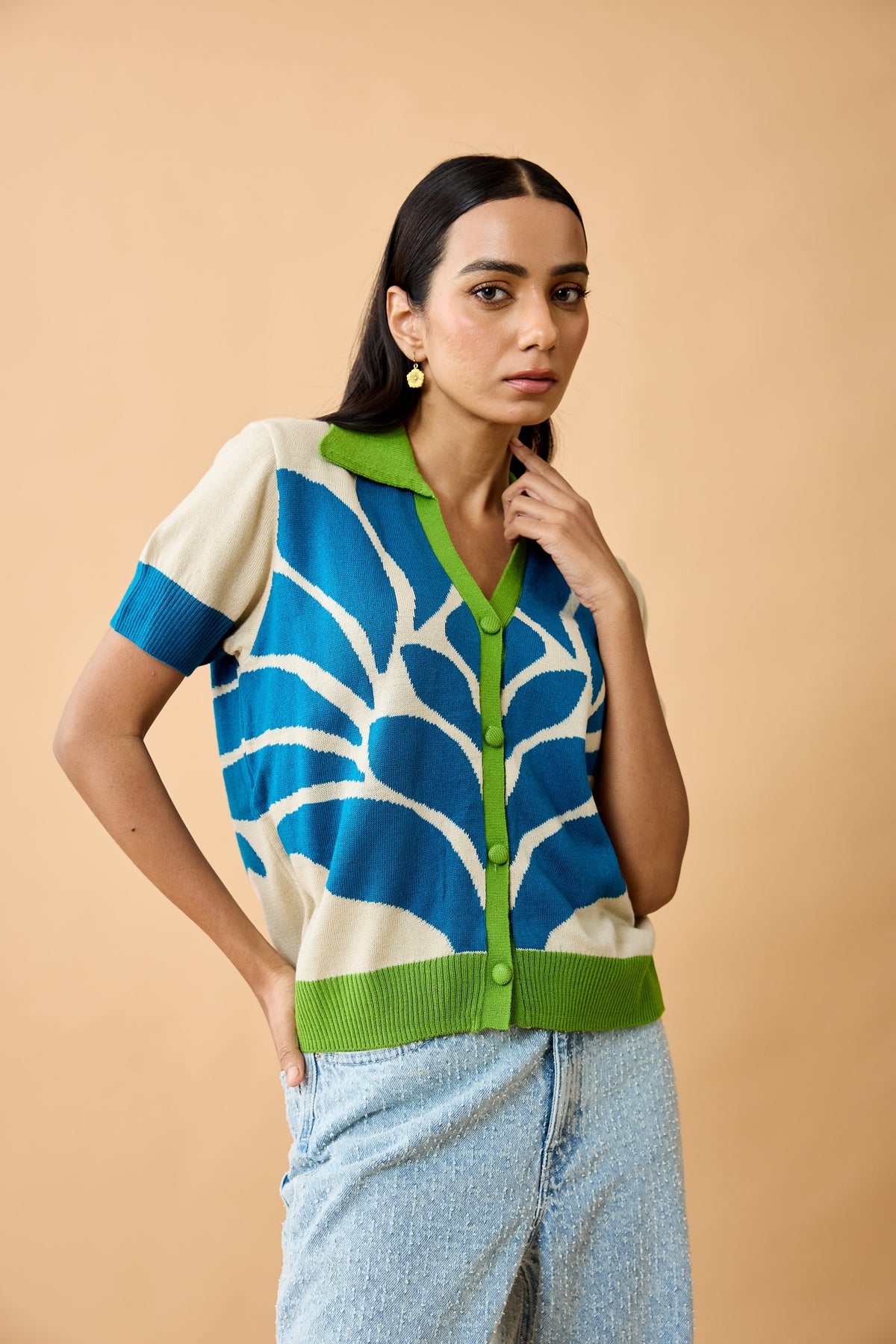
What to Wear in 15-20°C Weather: The In-Between Guide
The hardest weather to dress for, because it doesn't stay still. One mid-gauge knit and a scarf handles a 15°C morning and a 22°C afternoon without carrying anything.
Read more

