How to Tell If a Sweater Is Good Quality: 7 Checks


Check seven things: the fibre on the label, the seams at the shoulder, the ribbing's recovery, the evenness of the stitches, the weight in your hand, the finish at the neckline, and the armhole shape. Together they tell you more in two minutes than the price tag does.
Price is a poor guide. A knit can be expensive because of the brand, the marketing, or the shop it sits in. Quality is physical, and it is all detectable by hand — you just have to know where to look.
1. The fibre on the label
Start here — but read it properly
Turn the garment inside out and read the composition. This line predicts a great deal about how the piece will age — provided you read the ratio and not just the fibre names.
What to look for: a natural fibre in the majority. Cotton, linen, merino or a cotton-rich blend will breathe, absorb moisture and feel dry against the skin. Once natural content falls below about half, breathability drops off sharply and the fabric starts to feel clammy in heat.
Blends are not automatically worse. This is the most common misreading. A second fibre is often there for a structural reason — strength, shape retention, colour fastness — and in some cases the garment could not exist without it. Recycled cotton, for instance, has shortened fibres and cannot be spun into fine-gauge yarn alone.
What is a genuine warning sign: a fully synthetic composition with no natural fibre at all, or a list of four or five fibres in small percentages, which usually indicates cost engineering rather than design intent.
2. The seams at the shoulder
The clearest single indicator of construction quality
Turn it inside out and find the shoulder seam. You are looking for one of two things.
Linked: the join looks knitted, lies flat, and you can see loops meeting loops. Linking joins the panels stitch by stitch, so the seam stretches exactly as the fabric does. It is slow and expensive, which is why it signals a serious garment.
Overlocked: a raised ridge of thread, like a sewn seam on a T-shirt. Faster and much cheaper. Because the thread stretches differently from the knit, the seam and fabric work against each other over time — which is why cheaper knits ripple at the shoulder or feel tight when you reach forward.


3. Ribbing recovery
A five-second test anyone can do
Take a cuff or the hem, stretch it firmly, and let go. It should snap back to its original width immediately.
If it returns slowly, or stays wider than it was, the rib is under-tensioned. Cuffs and hems take more stress than any other part of a garment, so if they cannot recover in a shop they certainly will not after twenty wears. This is the fastest way to identify a knit that will look shapeless within a season.
4. Evenness of the stitches
Hold it up to the light
Look across a flat area — the middle of the back is best. The stitches should be regular and consistent, forming an even grid.
Irregular stitches, wavy rows or patches of visibly different density mean inconsistent machine tension, usually from a production run pushed too fast. Uneven tension causes uneven shrinkage later, which is how a garment ends up twisting or pulling to one side after washing.
5. Weight in the hand
Pick it up. A good knit has a density and drape you can feel. It hangs rather than floating.
Very light, papery fabric usually means thin yarn knitted loosely to cover more area with less material. It is a cost decision, and it shows up as transparency, snagging and loss of shape. Weight is not the same as warmth — a fine-gauge summer knit should still feel substantial for its thickness.
6. The neckline finish
The neckline takes constant stress from being pulled on and off, so it is where corners get cut.
It should lie completely flat against the body with no rippling or curling, and the rib should be an integrated part of the garment rather than a strip attached afterwards. Check the join at the back of the neck: on a well-made piece it is neat and barely visible.
7. The armhole
On properly made knitwear each panel is knitted to shape, so the armhole curve is knitted as a curve. It sits smooth and follows the body.
If the armhole puckers, or the seam looks like fabric has been cut and stitched, the garment was likely cut from knitted yardage rather than knitted to shape. That means raw cut edges inside the garment, more waste in production, and a piece that loses shape faster.
The full checklist
| Check | Good | Poor |
|---|---|---|
| Fibre | Natural fibre in the majority; blends with a clear purpose | Fully synthetic, or four-plus fibres in small percentages |
| Shoulder seam | Flat, knitted-looking, linked | Raised thread ridge, overlocked |
| Ribbing | Snaps back immediately | Slow return, or stays stretched |
| Stitches | Even and regular throughout | Wavy rows, uneven density |
| Weight | Dense, drapes, hangs | Papery, floats, slightly transparent |
| Neckline | Flat, integrated rib, neat join | Ripples or curls, attached strip |
| Armhole | Smooth knitted curve | Puckered, cut and sewn |
Use this on our knitwear too. Every piece is 100% cotton or GRS certified 60% recycled cotton, 40% recycled acrylic, knitted panel by panel and joined by linking. Those are the things this checklist is designed to detect — and they are the reason our pieces cost what they do.
What price does and doesn't tell you
Expensive knitwear is not automatically well made. You may be paying for a name, a location, or a marketing budget. Equally, cheap knitwear is not automatically badly made — though below a certain price the maths stops working, because good yarn and linked seams have a floor cost that cannot be engineered away.
Two questions worth asking of any piece: what will this look like after twenty wears, and what will it look like after twenty washes. The seven checks above are a proxy for both.
Frequently asked questions
How can you tell if a sweater is good quality?
Check the fibre composition on the label, look for flat linked seams rather than raised overlocked ones, stretch the cuff to see if it snaps back, hold the fabric to the light to check for even stitches, and feel the weight in your hand. Poor quality shows as fully synthetic composition, thread-ridge seams, slow ribbing recovery and uneven stitch density.
What is the best material for a sweater?
For warm climates, cotton, linen and cotton-rich blends are best. For cold weather, merino wool and cashmere. What matters most is that a natural fibre is in the majority, since below roughly half natural content the fabric traps heat and moisture against the skin.
Are blended fabrics lower quality than pure ones?
Not necessarily. A second fibre is often present for a structural reason such as strength, shape retention or colour fastness, and some yarns cannot be made without one. Recycled cotton, for example, has shortened fibres and cannot be spun into fine-gauge yarn alone. What matters is the ratio and whether the blend has a purpose.
How do you check the seams on knitwear?
Turn the garment inside out and look at the shoulder seam. A linked seam looks knitted and lies completely flat, because the panels are joined stitch by stitch. An overlocked seam forms a raised ridge of thread, which stretches differently from the knit and can cause rippling or tightness over time.
Does an expensive sweater mean better quality?
Not necessarily. Price reflects brand, retail location and marketing as well as construction. Good yarn and linked seams do have a floor cost, so very cheap knitwear is rarely well made, but expensive knitwear is not automatically well made either. The physical checks are more reliable than the price.
Why does my sweater lose its shape?
Usually one of three reasons: under-tensioned ribbing at the cuffs and hem that cannot recover, seams that stretch differently from the fabric, or storage on a hanger, which concentrates the garment's weight on the shoulders. Fold knitwear rather than hanging it, and check ribbing recovery before buying.
What does gauge tell you about quality?
Gauge is the number of stitches per inch and indicates fineness rather than quality directly. However, consistent tension at any gauge is a quality signal, and very loose knitting with thin yarn is often a way to cover more area with less material. Even, regular stitches matter more than the gauge number itself.
The short version
Label, shoulder seam, cuff snap, stitch evenness, weight, neckline, armhole. Two minutes with any knit, in any shop, and you will know what you are buying.
Read more on how knitwear is made, why fibres get blended, or browse the knitwear collection.
Read more
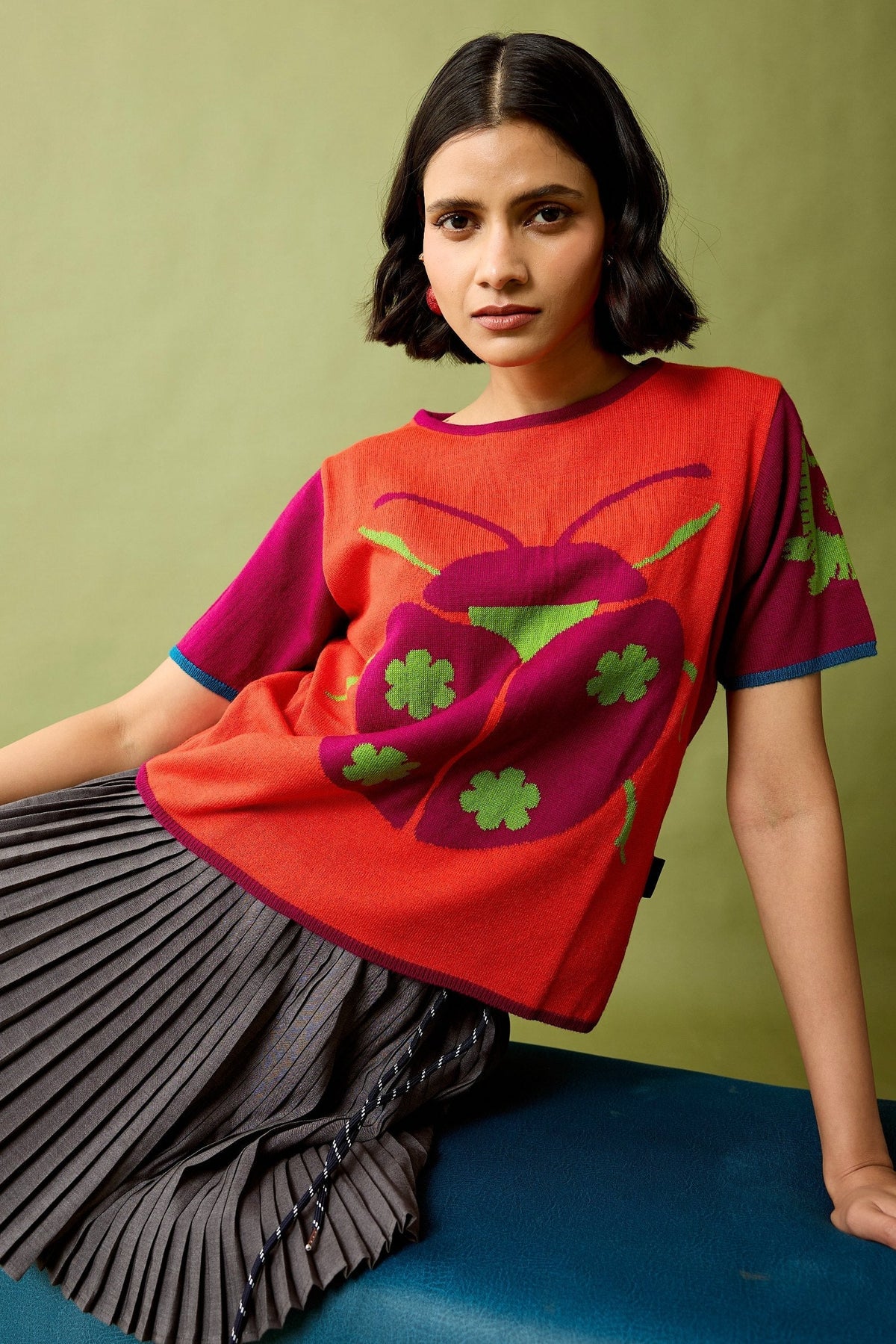
How to Store Knitwear in Humidity: A Monsoon Guide
In Indian humidity the real threat isn't moths — it's mildew, and the plastic covers most people use make it worse. How to store knits through monsoon so they survive it.
Read more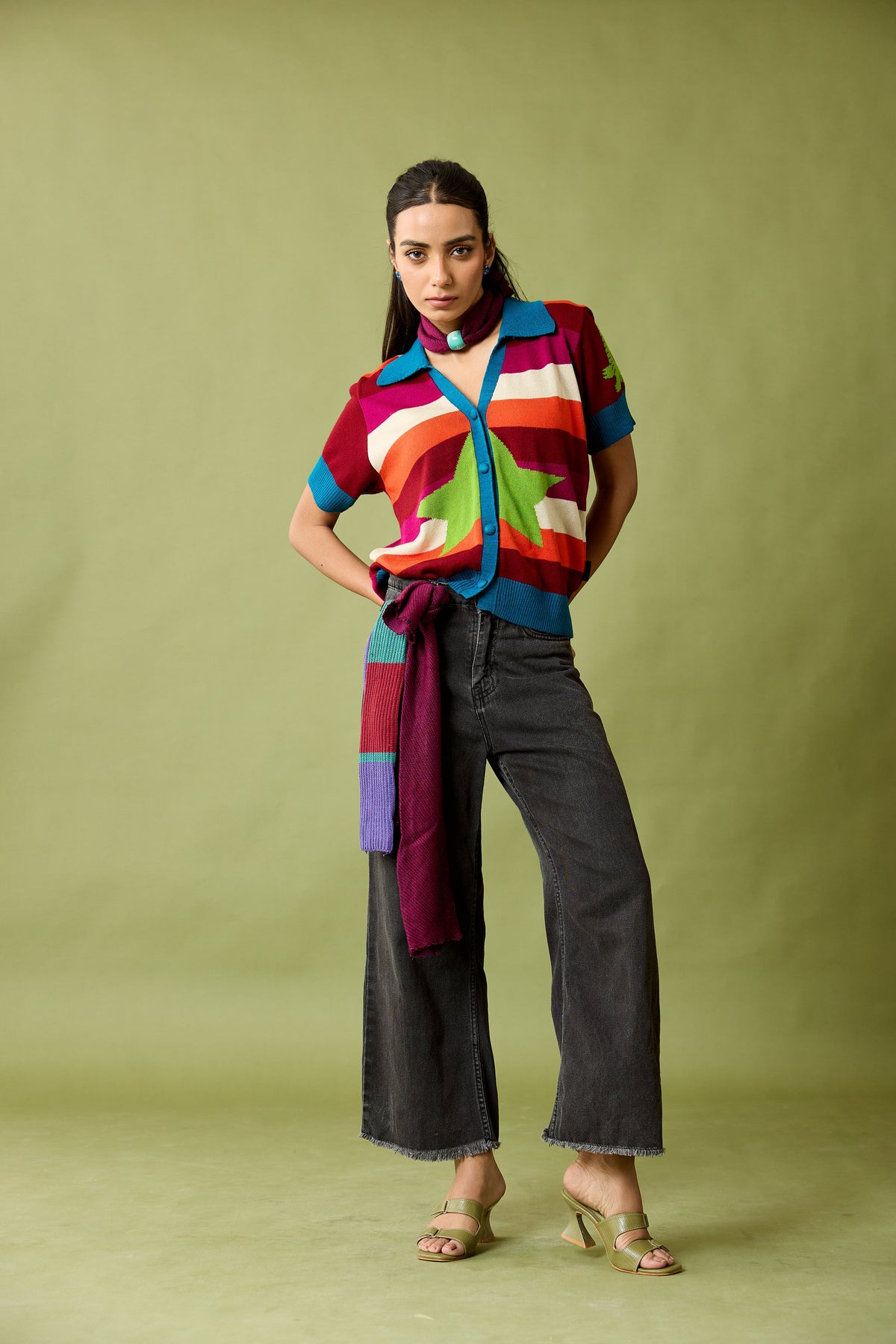
Sweater vs Cardigan vs Jumper vs Pullover: Explained
Two garments, five words. A cardigan opens at the front, a pullover doesn't, and jumper and sweater are just British and American names for the same thing.
Read more

