

How to Layer Knitwear Without Looking Bulky


Layer knits without bulk by keeping every layer fine-gauge, varying the lengths so hems do not stack at the same point, and letting only one layer be loose. Bulk comes from thickness and from repetition — not from the number of layers.
Two thin layers read as considered. Two thick layers read as padding. Most people trying to layer knitwear reach for the wrong gauge first, then blame layering when the result looks heavy.
The three rules
1. Gauge before everything
Fine gauge is 12 to 18 stitches per inch — close to a T-shirt in thickness. Two fine-gauge layers together are still thinner than one chunky knit.
If you want to layer, buy for gauge rather than for warmth. A single chunky knit cannot be layered under anything; a fine-gauge one can go under a cardigan, a shirt, or a jacket and still leave room to move.
2. Vary the lengths
This is the rule most often missed. If two hems finish at the same point on the body, they create a thick horizontal band — and the eye reads any horizontal band as width.
Offset them by at least ten centimetres. A shorter knit over a longer one, or a long cardigan over a cropped body. The staggered line reads as depth rather than bulk.
3. Only one layer loose
Loose over loose is where volume gets out of control. Pick which layer carries the volume and keep the others close.
- Fitted base, loose knit over it — the easiest version.
- Loose base, close cardigan over it — works if the cardigan is fine enough to follow the body.
- Loose over loose — only with real length difference and a defined waist somewhere.


Layering combinations that work
| Combination | Why it works | Watch for |
|---|---|---|
| Fine knit + scarf | All the warmth is at the neck, none through the body. | Nothing. The safest layering there is. |
| Half-sleeve knit over long-sleeve tee | Sleeve lengths differ, so the arm shows two clean lines. | Base sleeves must be slim, or the arm bulks. |
| Knit vest over a shirt | No sleeve overlap at all. Structure through the body only. | Shirt collar and cuffs should be crisp. |
| Open cardigan over a fitted knit | The open front creates two vertical lines, which read as length. | Keep the cardigan open; buttoning doubles the width. |
| Knit under a jacket | Fine gauge fits inside a sleeve where a chunky knit will not. | Check the shoulder still moves freely. |
Where bulk actually comes from
- The armhole. Two layers of fabric meeting at the underarm is the single worst spot. Fine gauge on the inner layer solves it.
- Stacked hems. Two hems at the same height create a band. Offset them.
- Bunched sleeves. A long sleeve pushed up under another sleeve concentrates fabric at the forearm. Either fully cover or fully expose.
- Ribbing over ribbing. Two ribbed hems together double the thickest part of both garments.
- Buttoned over loose. A fastened cardigan over a full body has nowhere for the fabric to go.
Our knits are made in fine gauge specifically so they layer. A 100% cotton or GRS certified 60% recycled cotton, 40% recycled acrylic knit at this weight goes over a tee, under a jacket, or alone — which is what makes one piece work across several months rather than a single season.
Three outfits
The two-second version
Fine-gauge knit, full-length trousers, knit scarf draped open. No second body layer at all. Covers 15 to 22°C and takes no thought.
The considered version
Slim long-sleeve tee under a half-sleeve knit, cuffs of the tee showing below the knit sleeve. High-waisted wide trousers, knit half-tucked at the front. The sleeve contrast does the work.
The cold-room version
Fine-gauge knit, open cardigan over it in a length that clears the knit's hem by fifteen centimetres, scarf across the shoulders. Three layers, no bulk, and two of them come off in one movement.
Frequently asked questions
How do you layer knitwear without looking bulky?
Keep every layer fine gauge, offset the hem lengths by at least ten centimetres so they do not stack at the same point on the body, and let only one layer be loose while the others sit close. Bulk comes from thickness and repetition rather than from the number of layers.
Can you wear a sweater over a sweater?
Yes, provided both are fine gauge and their lengths differ. Two fine-gauge knits together are thinner than one chunky knit. Avoid matching hem heights and avoid two ribbed hems meeting, which doubles the thickest part of both garments.
What do you wear under a knit top?
A slim long-sleeve or short-sleeve cotton tee works best, because the sleeves need to fit inside the knit's sleeve without bunching at the armhole. A crisp shirt also works well under a knit vest, where there is no sleeve overlap at all.
Does layering make you look bigger?
Only if the layers are thick or their hems align. Offset hems create vertical interest rather than a horizontal band, and an open cardigan creates two vertical lines that read as length. Fine-gauge layering can look slimmer than a single heavy knit.
How do you layer clothes in warm weather?
Use a scarf rather than a second body layer. It adds warmth at the neck, where you feel cold first, without adding any thickness through the torso, and it can be removed and carried easily when the temperature rises.
Should you button a cardigan when layering?
Usually not. An open cardigan creates two vertical lines down the body, which read as length, while buttoning it closed adds the full width of the garment to whatever is underneath. Leave it open unless the layer beneath is close-fitting.
The short version
Fine gauge, offset hems, one loose layer. If a combination looks heavy, the problem is almost always thickness or a stacked hem — not the fact that you are layering.
More on styling a scarf, dressing for 15–20°C, or browse the knitwear collection.
Read more
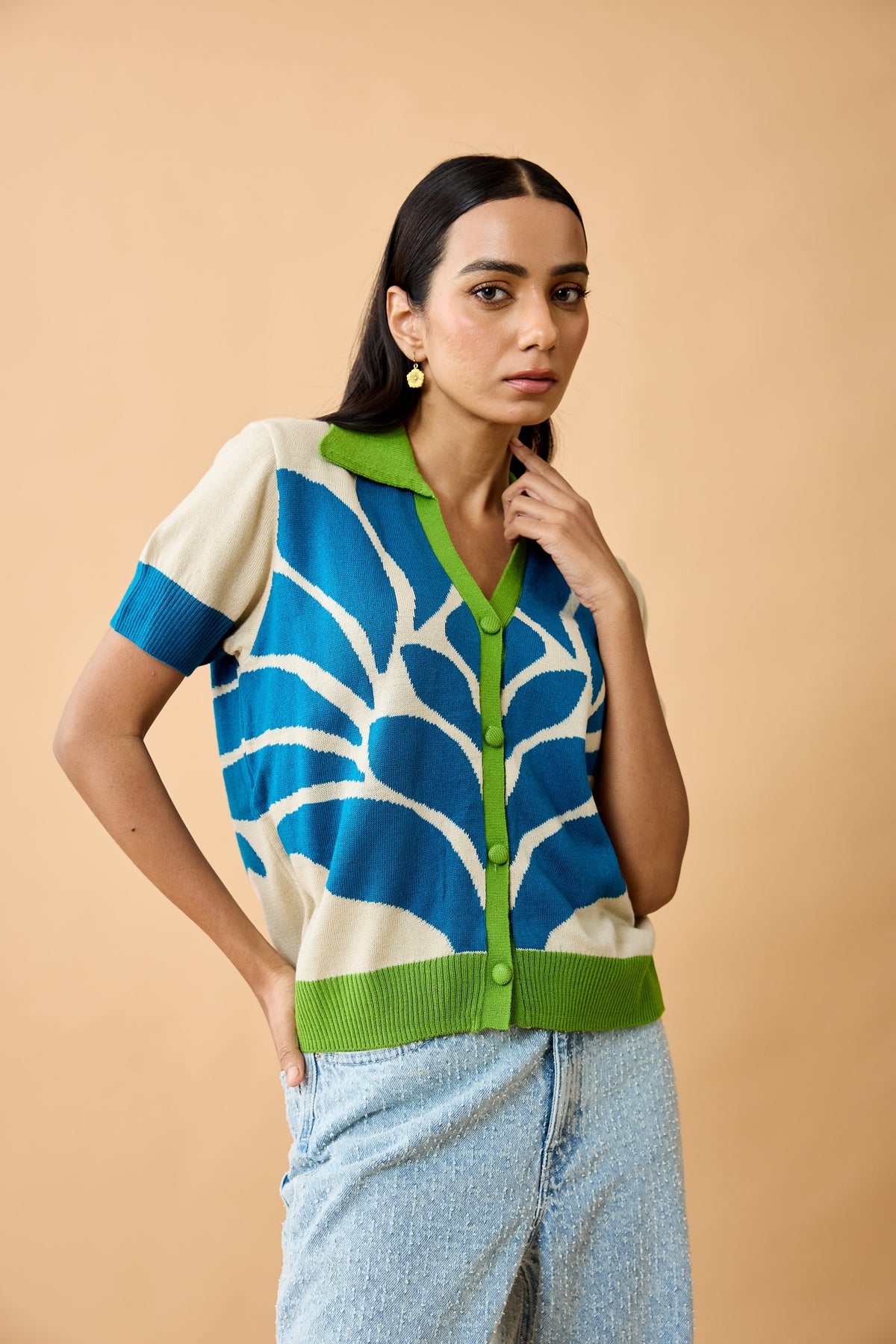
What to Wear in 15-20°C Weather: The In-Between Guide
The hardest weather to dress for, because it doesn't stay still. One mid-gauge knit and a scarf handles a 15°C morning and a 22°C afternoon without carrying anything.
Read more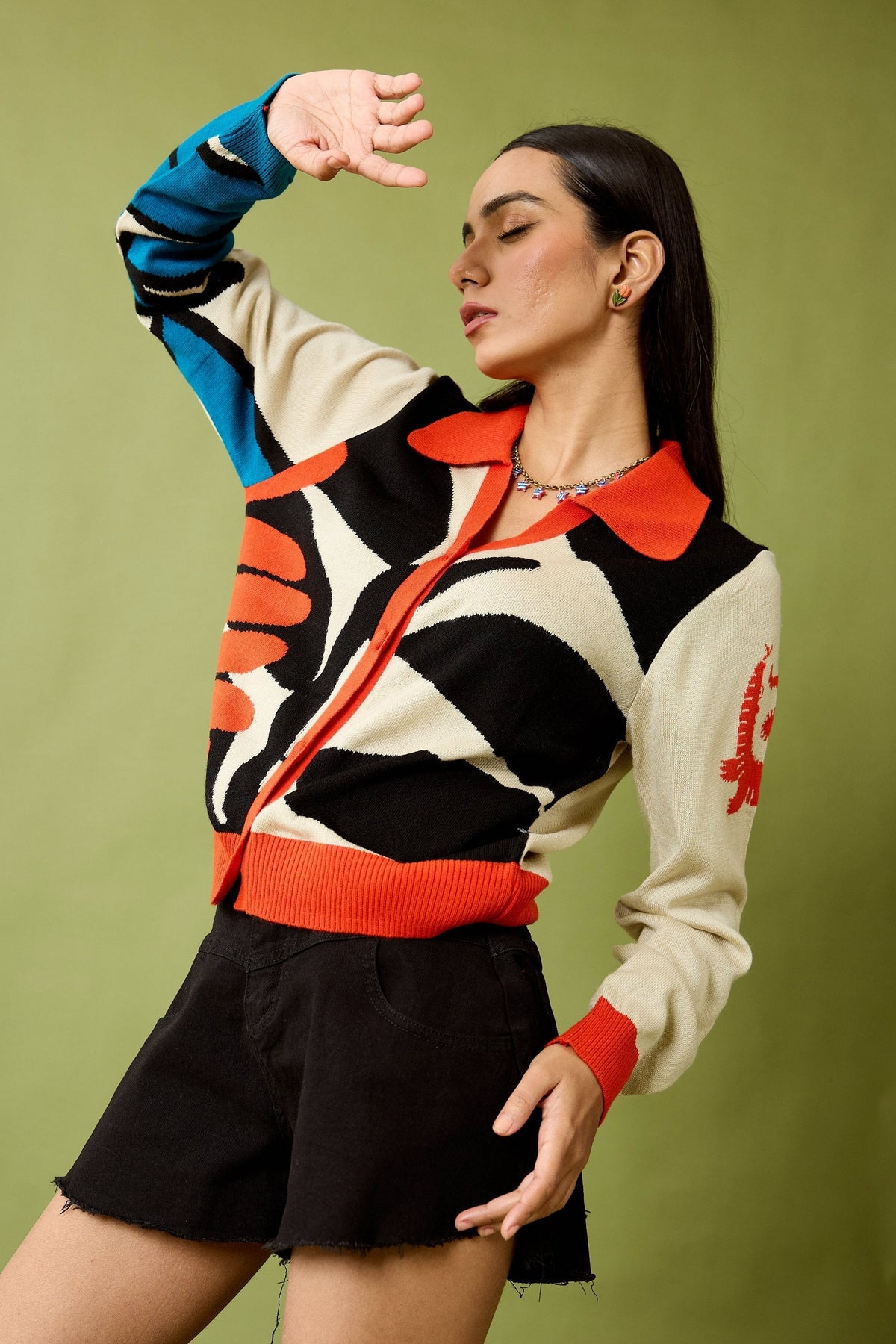
Knitwear for Travel: What to Pack and Why It Works
A travel day is a temperature obstacle course. Why knitwear handles it better than anything else, what to pack for a week, and the outfit that needs no adjusting.
Read more

