

Half Sleeve vs Full Sleeve Knits: Which to Buy


Buy the half sleeve first. In most of India it is wearable for eight or nine months of the year, where a full sleeve is comfortable for five or six. The full sleeve is the better second purchase, because it extends your range downward and layers over the first.
This is the most common question people have when buying their first knit, and the answer is climate-dependent rather than a matter of taste. Advice written for Europe gets it backwards for India.
The temperature case
| Temperature | Half sleeve | Full sleeve |
|---|---|---|
| Above 32°C | Comfortable | Only if very loose, as sun protection |
| 26–32°C | Ideal | Warm, but workable in fine gauge |
| 20–26°C | Good, with a scarf if it drops | Ideal |
| 15–20°C | Needs a layer over it | Good, with a scarf |
| Below 15°C | As a layer underneath | As a layer, or under another |
Count the rows. The half sleeve is the primary garment in two bands and useful in all five. In Mumbai, Chennai or Bangalore it is the more practical purchase by a wide margin.
What each one actually does better
The half sleeve
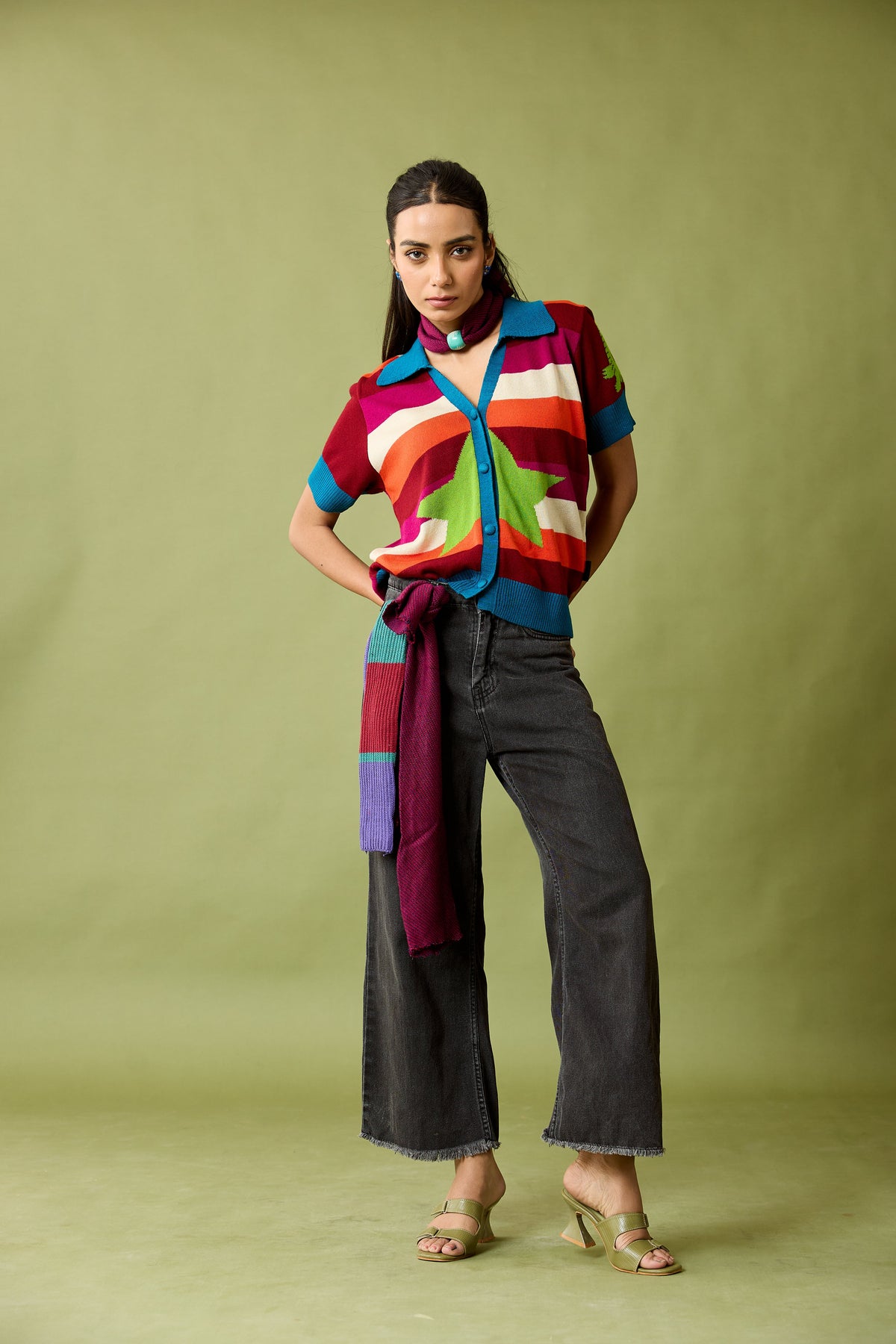
- Replaces the T-shirt. Same ease, but it holds its shape and reads as considered.
- Works in genuine heat, which is where most of the Indian year sits.
- Layers underneath without bulking at the armhole — the spot where layering usually goes wrong.
- Shows the forearm, which visually lightens an outfit and keeps a knit from looking heavy in warm weather.
The full sleeve
- Extends the range downward by roughly five degrees on its own, more with a scarf.
- Reads as more formal, which matters in conservative offices and for evening occasions.
- Protects from sun when loose and light, blocking radiant heat while still letting air move.
- Handles over-air-conditioned rooms without needing a second garment.


Where you live decides it
- Mumbai, Chennai, Kolkata, Goa: half sleeve, clearly. Full sleeve only for air conditioning and the few January mornings.
- Bangalore, Pune, Hyderabad: closer to even. Bangalore's year sits largely in the 20–26°C band, which is full-sleeve territory, but half sleeves still work most days.
- Delhi, Jaipur, Chandigarh, Lucknow: both, eventually. Half sleeve carries March to November; full sleeve carries November to February.
- Hill stations, or frequent travel to colder places: full sleeve first.
The half-tuck detail
One practical difference worth knowing. A half-sleeve knit tucks and half-tucks more easily, because there is no sleeve bulk to disturb the line at the waist. Full-sleeve knits generally look better left out, or fully tucked with the sleeves pushed up.
If you like a defined waist, that nudges toward the half sleeve.
Both are knitted in 100% cotton or GRS certified 60% recycled cotton, 40% recycled acrylic, at a fine gauge — which is why a full sleeve is wearable well above the temperature you would expect. Gauge matters more than sleeve length in deciding whether a knit works in heat. See the knitwear collection.
Sleeve length is not the main variable
Worth stating plainly, because it is where most people go wrong: a fine-gauge full sleeve is cooler than a chunky half sleeve.
Gauge governs how much air moves through the fabric, and fibre governs how moisture is handled. Sleeve length only determines how much skin is covered. A loose, fine-gauge full sleeve in 30°C is genuinely comfortable — and in direct sun it can be cooler than bare arms, because it blocks radiant heat.
So if you are choosing between a fine-gauge full sleeve and a heavier half sleeve for warm weather, take the full sleeve.
Buying both
If you are buying two pieces rather than one, the pairing works better than two of either:
- Half sleeve in a neutral. The everyday piece, worn most.
- Full sleeve in a colour or pattern. Fewer wears, so it can carry more interest.
- They layer together — half sleeve under full sleeve creates the sleeve-length contrast that makes layering look deliberate.
Frequently asked questions
Should I buy a half sleeve or full sleeve knit?
In most of India, buy the half sleeve first. It is wearable for eight or nine months of the year against five or six for a full sleeve, and it layers under other pieces when it turns cold. A full sleeve is the better second purchase, since it extends your range downward.
Can you wear a full sleeve knit in summer?
Yes, if it is fine gauge and loose. Knitted fabric lets air move through the loop structure, and a loose sleeve in direct sun blocks radiant heat while still ventilating, which can be cooler than bare skin. A fitted or chunky full sleeve in heat is uncomfortable.
Is a half sleeve knit cooler than a full sleeve?
Not necessarily. Gauge and fibre matter more than sleeve length. A fine-gauge full sleeve is cooler than a chunky half sleeve, because gauge governs how much air passes through the fabric while sleeve length only determines coverage.
What is the difference between a half sleeve and a short sleeve?
The terms are used interchangeably in most of India, where half sleeve is the common phrase for a sleeve ending around mid-upper-arm. Elsewhere short sleeve is standard. Some brands use half sleeve for a slightly longer sleeve reaching closer to the elbow.
Which knit is better for an office?
A full sleeve generally reads as more formal, which matters in conservative workplaces and for evening events. A half sleeve with tailored trousers is perfectly appropriate in most Indian offices and handles the commute in heat considerably better.
Can you layer a half sleeve under a full sleeve?
Yes, and it is one of the better layering combinations, because the different sleeve lengths create a visible contrast at the forearm that makes the layering look deliberate. Keep both fine gauge so the armhole does not bulk.
The short version
Half sleeve first in most of India, full sleeve second. But gauge matters more than sleeve length — a fine full sleeve beats a chunky half sleeve in heat, every time.
More on what to buy first, how knitwear should fit, or knitwear in warm weather.
Read more
Wearing Colour and Pattern Without Overdoing It
Most people who say they can't wear colour have worn too much at once, or in the wrong proportion. The one-loud-thing rule, and why knitted colour is more wearable than print.
Read more
How Long Should Knitwear Actually Last?
Nobody puts a lifespan on the label. Realistic expectations by construction type, the three things that actually kill knitwear, and how to tell normal ageing from failure.
Read more

