

Article: Festive Dressing Without Traditional Wear
Festive Dressing Without Traditional Wear


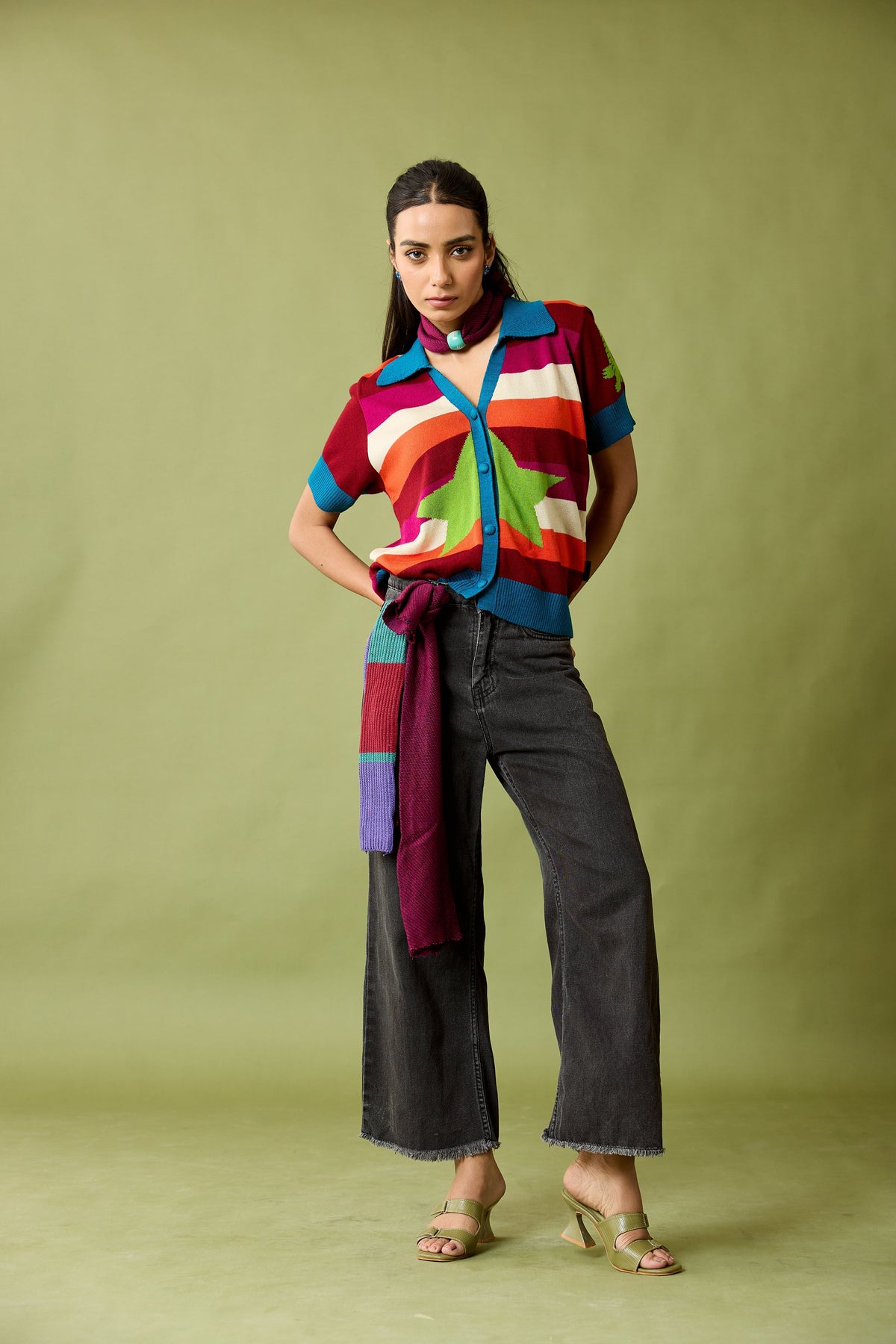
For festive occasions where traditional wear is not expected, a jacquard knit with tailored trousers works better than a dress: it carries colour and pattern without embellishment, it holds its shape through a long evening, and it moves between a lunch, a puja and a dinner without changing.
Indian festive season creates a specific dressing problem. There are weeks of occasions, a large share of them are not formal enough for traditional wear but too considered for everyday clothes, and most of them run long — four hours minimum, often more, frequently in heat.
What fails in that window is anything stiff, anything that creases, and anything you cannot sit down in comfortably.
Why knitwear suits the season
- Colour without embellishment. Jacquard carries saturated colour and pattern knitted into the fabric, so a piece reads as festive without sequins, zari or anything that catches.
- It survives the length. A knit looks the same at 10pm as at 6pm. Woven fabric creases every time you sit.
- It handles the temperature. October in most of India is still warm by day and cool after dark. A fine-gauge knit covers both.
- You can actually eat in it. Knitted fabric moves with the body. Nothing digs in after a heavy meal, which no structured garment can claim.
Three festive outfits
Daytime — lunches, family visits, office celebrations
A jacquard half-sleeve knit with wide-leg tailored trousers. Half-tuck at the front. Flat sandals or a low block heel. One pair of statement earrings and nothing else.
The pattern does the celebrating. Everything else stays quiet, which is what keeps it from tipping into costume.
Evening — dinners, parties
The same knit, restyled. Fully untucked, a heeled shoe, a scarf draped long down the front to add a vertical line, and darker or richer trousers. If the knit is plain, this is where a patterned scarf carries the whole look.
The advantage is real: you can go from a daytime event to an evening one without going home.
Puja and temple visits
A full-sleeve fine-gauge knit with covered shoulders and a scarf that can be drawn over the head when needed. Modest, comfortable in a crowded room, and it does not require carrying a separate stole that clashes with everything.


Pairing with traditional pieces
Knitwear does not have to replace traditional wear. It combines with it more easily than most people assume.
| Combination | Why it works |
|---|---|
| Fine knit top with a silk or cotton sari | A knitted blouse alternative that is comfortable for hours and needs no tailoring. |
| Knit top with a lehenga skirt | Quietens an ornate skirt and makes it wearable outside weddings. |
| Knit scarf instead of a dupatta | Stays where you put it, which a slippery dupatta does not. |
| Plain knit under a heavily worked jacket | Gives the jacket something calm to sit against. |
Our colourwork pieces are knitted in GRS certified 60% recycled cotton, 40% recycled acrylic, with the pattern knitted into the fabric rather than printed on it. That is what lets a piece read as festive without any applied embellishment — and why the colour stays saturated through a season of wear rather than one occasion. Plainer styles are 100% cotton. See the knitwear collection.
Five things to avoid
- Pattern on pattern. A jacquard knit with a printed skirt is one decision too many. Let one carry it.
- Heavy jewellery with a busy knit. Pick the knit or the jewellery, not both.
- Anything new and unworn. A festive day is eight hours long. Find out how something sits before you commit to it.
- Chunky gauge. October is still warm in most of India. Fine gauge or you will regret it by the second hour.
- Light colours at a meal-heavy event. Practical rather than stylistic, but it is the advice people wish they had taken.
Caring for festive knits
Season means repeated wear over a few weeks, often with food and long hours.
- Air between wears rather than washing each time. A night flat in moving air handles most of it.
- Spot-clean marks immediately with cool water, blotting rather than rubbing.
- Wash inside out at 30°C in a mesh bag when the season ends.
- Dry flat and out of sun. On jacquard, uneven sun fading is far more visible than on a plain knit.
- Store folded with the season's other pieces, away from light.
Frequently asked questions
What can you wear for festive occasions instead of traditional wear?
A jacquard or colourwork knit with tailored trousers works well for occasions that are celebratory but not formal. It carries colour and pattern without embellishment, stays comfortable over a long event, and can be restyled from day to evening by changing shoes and adding a scarf.
Is knitwear suitable for Indian festive season?
Fine-gauge knitwear suits it particularly well. October and November are warm by day and cool after dark, and a fine knit covers both. It also resists creasing over a long event and moves with the body, which structured festive clothing generally does not.
How do you dress up a knit top?
Leave it untucked, add a heeled shoe, drape a scarf long down the front to create a vertical line, and choose richer or darker trousers. Keep jewellery to one considered piece. The same knit worn with flats and a half-tuck reads as daytime.
Can you wear a knit top with a sari?
Yes. A fine-gauge knit top works as a blouse alternative, and it is considerably more comfortable over several hours than a fitted stitched blouse. It also needs no tailoring, which makes it useful when a sari is worn at short notice.
What should you wear to a puja?
A full-sleeve fine-gauge knit with covered shoulders and a scarf that can be drawn over the head when required. It is modest, comfortable in a crowded indoor space, and avoids carrying a separate stole that may not coordinate with the rest of the outfit.
How do you avoid overheating at long festive events?
Choose fine gauge rather than chunky, favour natural or cotton-rich fibres that absorb moisture, and use a scarf as the adjustable layer rather than a jacket. Anything you cannot remove easily becomes a problem once an event runs past a few hours.
The short version
Jacquard knit, tailored trousers, one accessory. Half-tuck and flats for daytime, untucked with a heel and a draped scarf for evening. It survives eight hours, a heavy meal, and the walk between three different events.
More on how colourwork is made, styling a scarf, or layering without bulk.
Read more
Jacquard Knitwear: How Colourwork Is Made
Almost every patterned garment you own is printed. Jacquard is the opposite — colour knitted into the structure itself. How it's made, how to spot it, and why the yarn matters more here.
Read more

